We will cover 4 areas relating to seafood. Get more info by clicking the links as you
go through "Seafood".
1. Classifications of Fish
2.6 forms of purchasing fish
3. What to look for when purchasing fish
4. Storage
Note from the chef:
Oh the rich bounty from the sea, bluefish caught and grilled up or striped
bass freshly drawn and cooked over an open fire next to the rolling waves
and the hush of the tide as it ripples on the shore. Well if you don't fish you
may not be able to imagine this, but you could share the thoughts of a
tender flaky fresh piece of fish. That is the key to the best fish, freshness.
Although frozen fish has made giant leaps from years past, there is no
substitute for fresh fish. That is the key, freshness and being able to
identify it.
3 classifications of fish (Click on the classifications to find out more)
1.Fin Fish – all fish having fins and gills of which there are two types.
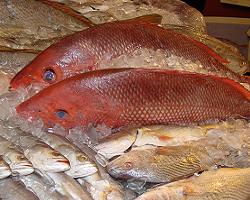
Round Fish – ex. haddock, cod, red snapper
Flat fish – ex. flounder, sole
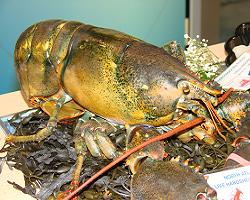
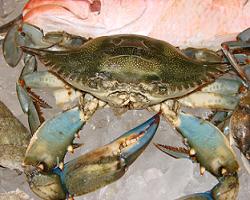
2. Crustaceans – have a hard outer shell which they shed in order to grow.
ex. Lobster, Crabs
3. Mollusks one of two types
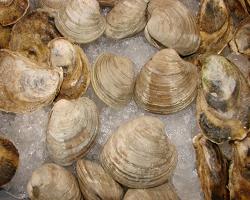
Bivalve - having two shells, two valves. Ex. clams, oysters.
Univalve - one shell, one valve. snail, sea urchin, squid.
6 different forms of purchasing fish
1. Fillets – most common form purchased, these are actually sides of the
fish.Someone else has gutted it, boned it, and most often
removed the skin.
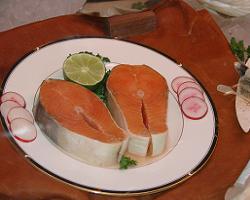
2. Steaks – This is a vertical cut of a dressed fish. Good for grilling. Has some bone
structure and skin.
3. Dressed – head, tail, and fins removed and gutted on eviscerated. This has the
bone structure in tact, with an open cavity.
4. Drawn – here only the stomach cavity and internal structure is removed. The
head, fins, and tail are in tact.
5. Whole – This is completely in tact. You should at least dress this fish before
storing it.
6. Processed – smoked, breaded, fish sticks, sea legs.
What to look for when purchasing:
Fin Fish
1. Fillets or Steaks – Should shine, be
slightly firm, should not have an odor.
Should have slightly sweet or neutral
odor, should not have an ammoniated
smell.
2. Whole or Drawn –
a. gills should be red or pink
b. the eyes should be
clear and bulging
c. scales should shine and
remain in tact
d. texture of flesh should be
springy, not mushy or tearing
e. odor no strong odor,
should smell sweet
Crustaceans
Look for liveliness, should be alive, (sleeper –
almost dead) Female cannot be bearing eggs on the
underside of tail.
Mollusks
If the shells are open, tap them and
they should close. You don’t want
to buy cracked shells
Storage:
Temperatures: Ideal Temperature would be
Fin Fish 33 -36 degrees f.
Crustaceans and Mollusks 36 – 40 degrees f.
1. If you have crushed ice available place your fish in a pan that can
drain.
2. Put saran, and then put a piece of paper bag over your fish.
Allow drainage.
3. Cover with crushed ice.
4. This will extend the life of your fish.
5. Do not do this with Crustaceans or mollusks.